



















Introducing New York Novelist, Colson Whitehead
Colson Whitehead’s fiction has won numerous awards since he published his first novel, Intuitionist in 1999: two Pulitzer Prizes, the Macarthur Award, a Guggenheim Fellowship, the Dos Paso Prize, a fellowship to the Cullman Center for Scholars and Writers, a Library of Congress Award in 2020, and a National Humanities Award in 2021. In 2018, New York State named him official New York State author.
A native New Yorker, Whitehead still lives in the city. Born into a financially successful family, Whitehead attended Trinity School in Manhattan and graduated from Harvard University in 1991. Of his early interest in writing, Whitehead has said,
I was a shut-in kid and loved to read and watch sci-fi matinees on TV. The switch for me was coming across Borges and Gabriel Garcia Marquez as a senior in high school. These were . . . people who wrote literature and were using the same fantastic effects I loved in horror and science-fiction, but using it toward a different end.
After college, Whitehead worked for The Village Voice, writing reviews on television, books and music; he also he began to frame his early novels. Since Intuitionist, Whitehead has written eight more, two works of nonfiction, and many articles for magazines and journals. His early novels, mostly set in New York, deal with subjects relative to New York City. Others, like John Henry Days (2001) point toward the racial content of his later, most successful novels, The Underground Railroad (2016) and The Nickel Boys (2019). His most recent novels Harlem Shuffle (2021) and Crook Manifesto (2023), part of a planned trilogy, again have NYC settings.
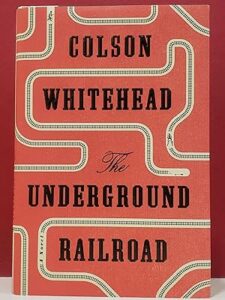
Of his novels, The Underground Railroad and The Nickel Boys garnered Whitehead his many awards. Both works are historical novels focused on racial issues that have concerned him throughout his life. He has said, “There’s something about the tragedy of slavery that made it seem sort of radioactive—I had the idea [for The Underground Railroad] in 2000, but [then] I didn’t feel like I was mature enough about it, or a good enough writer.” He has also said that his earlier New York books concern race but with a bit of humor. His later novels, he says, are too serious for “joking.”
Whitehead set The Underground Railroad in Alabama and other states in the years before the Civil War. His main character, Cora, begins life on a cotton plantation, operated by brutal owners whose aim is to make as much money as possible from cotton. Cora is nine when her mother escapes, leaving her daughter as an outsider, even within the slave community. When she is in her mid-teens, Caesar, a newcomer to the plantation convinces her to leave with him via the Underground Railroad, which, through Whitehead’s imagination, is both metaphorical in the historical sense and literal: runaways are transported on underground trains that tunnel from the South to the North. Entering the system, Cora moves through the South, experiencing trouble of one kind or another wherever she gets off the train. In a way, Whitehead’s creation of this actual Underground Railroad seems to suggest that the actual system was often well-meaning but only partly successful.
The greatest strength of the novel evolves from Whitehead’s ability to create a completely believable female protagonist, one who is highly intelligent, brave, self-sufficient, and wily—able to do what she needs to do in order to survive. Like Percival Everett, in James, Whitehead also uses language to emphasize Cora acute intelligence. Ron Charles in The Washington Post writes, “ ‘The Underground Railroad’ reanimates the slave narrative, disrupts our settled sense of the past and stretches the ligaments of history right into our own era.”
Whitehead’s The Nickel Boys is, like The Underground Railroad, another historical novel, but this one deals with more recent history and Whitehead’s treatment of the subject is more realistic. Basing the novel on an actual “reform-school”/prison in Florida, Whitehead recreates the actual Dozier School in the Florida panhandle which operated from January 1900 to June 2011. For years, the school had a horrific reputation with allegations of all kinds of abuse, including concealed murders. Only in 2009 did a failed state inspection lead to a full investigation that forced the school’s closing. In 2012 an investigation by anthropologists from the University of South Florida found 55 burials on the grounds, mostly outside the cemetery. Study of remains revealed that three times more Blacks than Whites were among those killed.
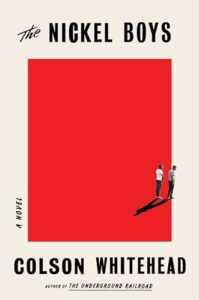
Whitehead has said that, after learning about the school and its history in 2014, he felt compelled to write about it. He read accounts by Ben Montgomery who had written article about Dozier for the Tampa Bay Times. He also found memoirs from survivors of the school that helped him gain insights into what it was like to be imprisoned there in the 1950s and 1960s. Whitehead mainly tells the stories of two young inmates, Elwood Curtis and Jack Turner, who experience the horrors of Nickel Academy. Elwood is a brilliant young student who ends up in the school after catching a ride with a man in a stolen car. Severely beaten on his arrival, Elwood continues to look forward to a future beyond the academy. Writing in a direct readable style, Whitehead creates a surprising twist at the end of the novel. The Nickel Boys was made into a highly acclaimed movie that came out last year and received an Academy Award nomination in the Best Film category.