










Celebrating 250 Years of American Independence
Native Americans in Plains District during the year prior to the War of Independence
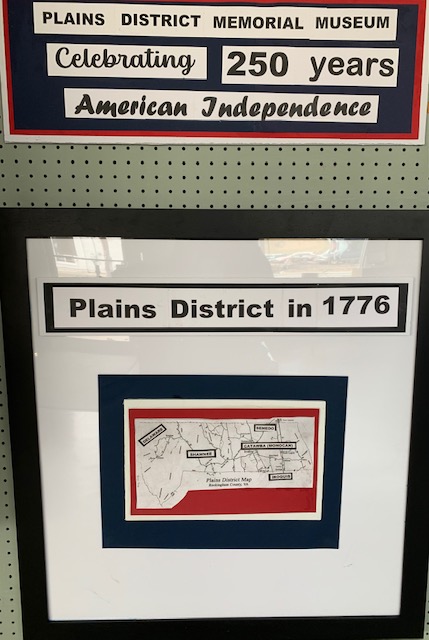
When the Declaration of Independence was signed two hundred fifty years ago, Plains District was largely an area of forests, some clearings some Native Americans, a few hundred settlers, and only a few towns. The Valley was accessible primarily by the North Fork of the Shenandoah River and Indian trails. The settlers were politically divided. There were those who favored loyalty to the King, those who were neutral, and a segment of Patriots such as those in Woodstock who founded a unit in the Continental Army to fight for American Independence. The most important contribution that these settlers made to the War of Independence was as farmers who provided food and supplies for troops.
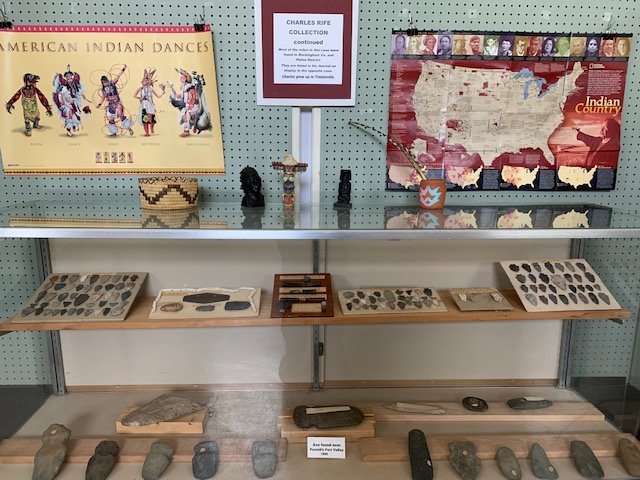
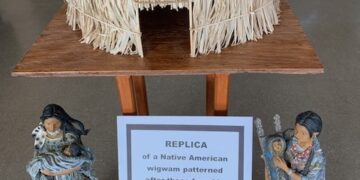
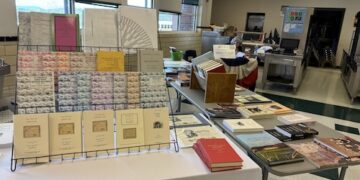
The current exhibit on display at the Museum presents an overview of the Plains District during the years preceding the signing of the Declaration of Independence. It focuses on the life of Native Americans who inhabited the area and the forts that were built by the few settlers as protection from them. The exhibit includes a model of a domed wigwam made by Museum volunteer, Joe Aldolph, extensive collections of. Native American artifacts found in the area by local collectors, Michael Driver, Ben May, and Mike Wean. The Museum’s entire Charles Rife collection of Native American artifacts is on display. Charles, born in 1882, the son of Henry A. Rife (a manufacturer of marble and granite monuments in Timberville, began collecting artifacts as a young boy. By the time of his death in 1946, his collection included almost three thousand pieces, each one carefully documented in a journal with the date and location where each was found. This collection was originally given to Rockingham County and displayed at the library in Harrisonburg. In 2006, the County named Plains District Memorial Museum as permanent custodian of the collection.
The free exhibit will remain on display at the Museum through July. We encourage students of all ages to plan a visit to view the exhibit and make a model of a 1700s Shenandoah Valley wigwam.