





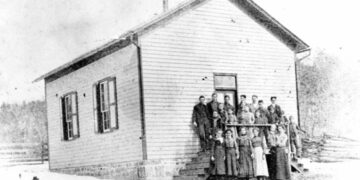



When new school superintendent George H. Hulvey decided to visit all Brocks Gap schools, he blocked off a whole week from his calendar. Why so long? It was 1886, and he was going on horseback. And he had not one, but 17 schools to visit. Luckily for us, he published a lengthy account of his trip in the local newspaper. He commented on the terrain he passed, condition of the schoolhouses, families he stayed with, and the people he saw. Here is the first part of his trip. My comments are in brackets [ ] to help understand where he visited.
On Monday, Nov. 22, 1886, Hulvey left Harrisonburg, traveling west [on what I assume is the future Route 33]. If a school was on his route, he stopped to visit. First was New Erection school, then a school near Hopkin’s Mill where the school was closed because the teacher was sick. Next was Liberty Hall School nearly west of Hopkin’s Mill. The travelers spent the night at the home where the teacher was boarding.
Needed road signs: The next morning was foggy and dark. They thought they had crossed the mountain and were near their next schoolhouse. To confirm, they asked a man going to the mill where the nearest school was located. They followed his directions and after much traveling, found they were almost back to where they had started in the morning. This time they asked a cooper to guide them back to a bridle path which was so steep their horses were almost in a vertical position.
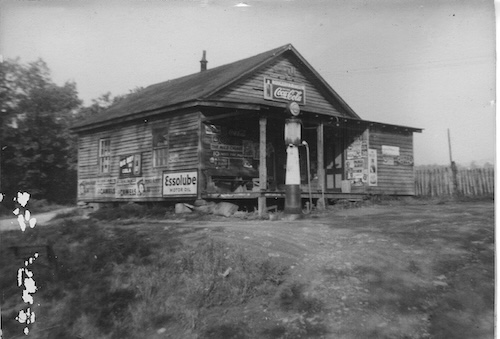
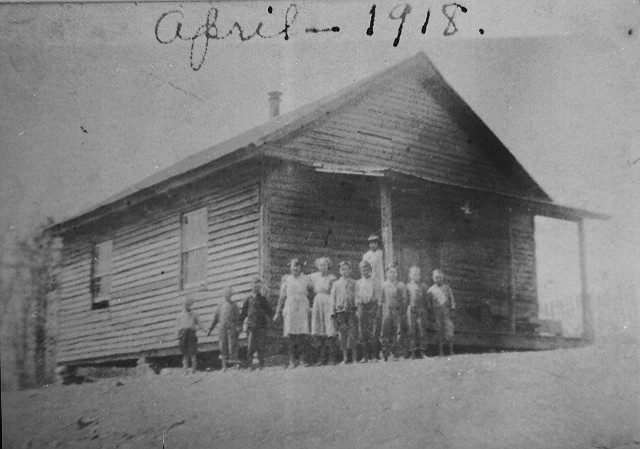
Finally, they reached what is now Hopkins Gap Road and visited their first Gap school 3 hours later than they had expected [it was near John Riley and George Fridley]. Next was Hoover’s schoolhouse [at intersection of Genoa Road and Hopkins Gap Road] where David Hoover was teaching a “small, but pleasant school, consisting of the children of his immediate neighbors.” Though the building was new, the stove pipe was defective, so Hulvey suspended the school until it could be fixed. [A later building for Hoover School is still standing on Genoa Road]. Teacher Hoover agreed to guide them to some other schools. Hulvey was surprised that Shoemaker School [near Gertie Shoemaker’s store] was closed because the lady teacher had gotten married [married women weren’t allowed to teach]. A male teacher was to reopen the school soon. Hulvey didn’t say where they spent the night, but it was probably with David Hoover’s family.
Wednesday morning, they took [the Genoa Road] and came out at Oak Grove School house [about where Mountain Grove church’s picnic shelter is located] where J. C. Cooper was teaching [Richard Cooper’s grandfather]. They turned west [went around Third Hill] and came out on [Little Dry River Road] and turned toward the Shenandoah Mountain. When passing around Third Hill, they saw a “huge pile of rough rocks” said to be the burial site of “Indian warriors who had fallen in a battle near that point by two hostile tribes.”
The only school between Third Hill and the Shenandoah Mountain was Dry River School [Ritchie School at Dull Hunt Road] where they spent a little time before going up the mountain. The Superintendent was surprised at how steep the mountain road was. It “was once good and well graded, is now somewhat neglected, and is becoming considerably inclined with the mountain. It would be dangerous to travel when the ground is icy; for if a horse should slip from the track there would be no possible chance for him or his horse to gain a footing.”
At the top, they turned slightly right [Fulk Mountain Road] “to a dim track along the top of the ridge” to reach Adam Turner’s school about 4:00. They had a pleasant talk with teacher and pupils. This was the last school in Linville District. They pushed on another 4 ½ miles to David Secrist’s house for the night, having ridden 30 miles to visit 3 schools. They knew Secrist because he used to live at Bridgewater.
Different crops: Hulvey wrote that short, cool mountain summers prevent growing wheat or the kind of corn grown in the valley. Instead, they have a corn variety that matures quickly. Rye, buckwheat, and Irish potatoes grow very well. Hog cholera was prevalent and “almost exterminated this species of animal throughout the entire Gap.”
Next month’s column will summarize Hulvey’s trip to the rest of Brocks Gap schools. He didn’t name every school. My educated guesses for the unnamed schools are in brackets. He visited Shaver, Caplinger, Capon Run, #31 [Pine Grove or Souder}, #30 [Dovesville or Wittig], #28 [Brake], [Fulks Run], #26 [Mt. Pleasant/Fawley], and [Chimney Rock] at the mouth of the Gap.