



















Lee Cole – Grounds-keeping and Fulfillment
During the past five years, another new Southern writer has appeared on the literary scene. Lee Cole, born into a lower-middle class family in Paducah, Kentucky. represents a new version of the so-called “rough south” writers who began their careers at the end of the 20 century. Differing from them, he possesses an awareness of class issues in the United States that goes beyond their outlook and attitudes. Harry Crews, Larry Brown, Dorothy Allison, and Wiliam Gay (among others) wrote about lower class life with a sense of pride in being able to tell about this echelon of Southern life.
Cole, acutely aware of his hard-working background, deals with the problems of contemporary rural life. He also reveals the cultural elitism experienced by people like himself. When admitted to the prestigious Writers Workshop at the University of Iowa, he soon identified his outsider status. He entered after earning a degree from the University of Kentucky and spending years as a merchandise handler in a UPS warehouse. He writes of the membership of his first workshop: “five of the eleven students were Ivy League alumni. Another three were graduates of elite private colleges. Only three, including myself, had gone to public state schools.” Cole feels, then, that writers, like himself, deserve the special attention given to “outsider” writers—women, ethnic writers, and those from the lgbtq+ community. Like Willy Loman in Death of a Salesman, he believes “attention must be paid.”
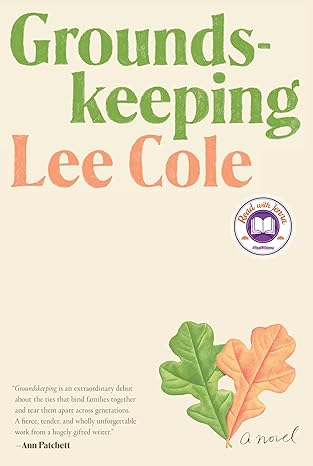
His two novels, Grounds-keeping (2022) and Fulfillment (2025), combine this concern with autobiographical elements, family dynamics, identity issues, and concern with the future of people from rural areas whose earlier independent lives are being undercut by industrial intrusion. He also writes out of an awareness of the current political situation.
Grounds-keeping features Owen Callahan, a would-be writer (like Cole himself) who returns to Kentucky after living an aimless life in Colorado. Penniless, he moves in with his grandfather and eccentric uncle. He gets a job as a groundskeeper at the nearby university and, taking advantage of one benefit–taking a class–, enrolls in a writing workshop where he meets other aspiring writers, one of whom becomes a close friend and another a romantic rival. Owen soon meets Alma Hazdic, a young visiting professor from NYC, who comes from a supportive background radically different from his. They share a mutual interest in writing and, she sees him as a way to learn more about the alien environment where she finds herself.
Cole also deals with changes in his home area. The old agrarian lifestyle has ended, a reality that Owen’s grandfather understands but finds hard to accept. He went through his own “wild” youth but ultimately returned to Kentucky to start a family and raise tobacco. His son, Owen’s uncle, severely injured in an automobile accident early in his life has never found any real focus. He spends his time playing video games and eating fast food. His bitterness is palpable, indicative of the ruin that has come to both his characters and to Kentucky, Cole, shows how this general dissatisfaction has led to the Trump era. Many rural people believed Trump’s promises. Grounds-keeping is a love story, a commentary on rural life, and a treatise on the desire for artistic success that can undercut all else.
Hamilton Cain begins his review of Cole’s second novel, Fulfillment, “Don’t look now, but a colossal literary career is sneaking in under the radar.” His statement may be a bit hyperbolic, but the novel is a strong one. Its title is ironic—the characters Cole creates experience little fulfillment. Again, he features a male character, Emmett Shaw, who returns to Paducah, having experienced no success outside Kentucky. Like his creator, he gets a job in a local big-box retailer. Through Emmett’s interaction with other workers there, Cole shows—beyond a steady paycheck–how little satisfaction such work brings. As in Grounds-keeping, Cole is showing the paucity of life in contemporary rural America, seeing no real solution to the loss of the agrarian economy.
Like Owen Callahan, Emmett has creative impulses; he thinks he can write a viable screenplay about life in the factory, but unlike Owen, Emmett does not have the required talent. He dreams but cannot produce.
More central to the novel is Cole’s focus on family issues, a concern of many Southern writers who see strong families as essential to healthy living. Cole’s view is somewhat different; Emmett comes from a mixed and troubled family. His mother Kathy, twice divorced, has had produced two sons, one in each marriage. From boyhood, Emmett, the older son, sees himself as the less-favored child. His half-brother Joel, though emotionally under-developed, has been identified as a “genius” from boyhood. By his early 20s, he has earned a Ph.D., written a best-selling book about the South, merited a college teaching job, and quickly married a fellow graduate student.
The family “reunites” when Joel, having earned a fellowship, returns to Kentucky to teach for a semester in a local college. Cole soon makes it clear that Joel’s superficial success has failed to fulfill him. He has little pride in his book, though it was successful enough to get him a college job and the fellowship. He does not connect well with his students, he is suffering from a writer’s block, and his marriage is not working. What follows is a failed reunion between the two brothers, work intrigue, and a “romance” between Emmett and Joel’s wife Alice. Fulfillment offers little hope for any of the characters. Overall, Cole is a realistic story teller with a full command of language and landscape and a fairly grim outlook.