











At the Time of the War for American Independence
Two hundred fifty years ago before Rockingham County had been established (1778), Plains District, then a part of Augusta County, was largely an uninhabited, mountainous area with abundant forests and random clearings. The few hundred settlers who lived here were scattered along the major waterways from Smith Creek on the east to the North Fork of the Shenandoah River on the west. The families, primarily German and Scot-Irish, who gradually immigrated to the Valley (mostly from Pennsylvania) in the early 1700s were farmers and millers with names including Robinson, Byrd, Radar, Burden, Custer, Dove, West, Seiver, Stover, and Kauffman, among others.
In the early years, these families co-existed peacefully with the Native American tribes who had lived in the Valley for centuries. The National Park Service data shows that Native Americans had lived in the Valley as far back as 15,000 to 11,000 BC.
Sources indicate that no official records were kept in the 1700s documenting the number of Native Americans or settlers in this area, however, most sources say that the Native Americans in the Valley had declined by the 1750s. The Park Service website includes a timeline beginning in 900 – 1400 AD which described a peaceful existence among the tribes who lived here. 1500-1700 showed a sharp increase in the number of Native Americans in the Valley. 1700-1800 showed an increase in the number of European settlers moving into the area, initially living peacefully with the Native Americans. By 1750, only a few of the Native Americans remained, the decline brought about by a number of causes, including diseases brought into the country by new settlers, a general movement among Indian tribes, and wars between tribes and with settlers.
According to Pat T. Ritchie in her book The Family of Jacob Fawley, as conflicts between Indian tribes and settlers increased, the colonial government in Virginia encouraged families living in the area to fortify their homes, churches, and other buildings for protection. She noted that in 1776, the government ordered several forts to be built along the Virginia frontier. Each fort was to be sixty feet with bastions-projectiles from the building to provide better firing range for defense – and manned by a specific number of soldiers. The only fort in Plains District known to come close to these specifications was Fort Hogg in Brocks Gap, built in the 1750s during the French and Indian War.
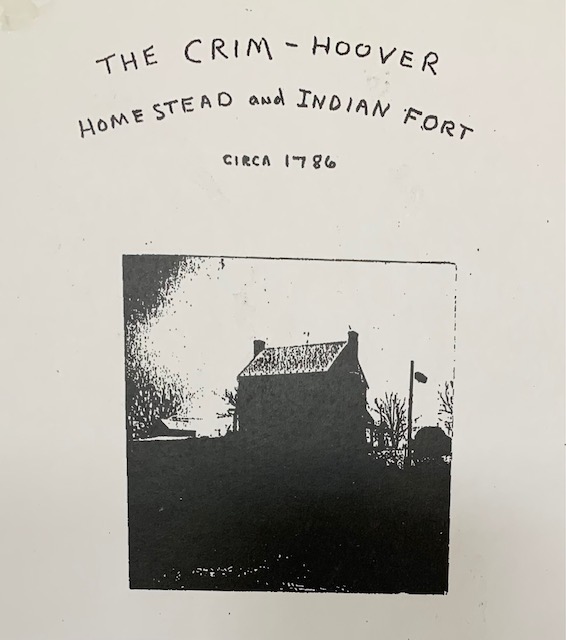
Beverly Garber, Timberville Town Historian, has identified three other forts in Timberville, the first just west of the original John Zigler House on the North Fork of the Shenandoah River, built in the 1750s. A second fort, the Old Indian Hut, is located northwest of Timberville. The third, Fort Run, was also known as Honey Run (1744), is also located northwest of town. In addition, Gary Meeks, who once owned the house, wrote that the Crim-Hoover House, located on the North Fork east of Timberville, was built as a Homestead and Indian Fort in 1786.
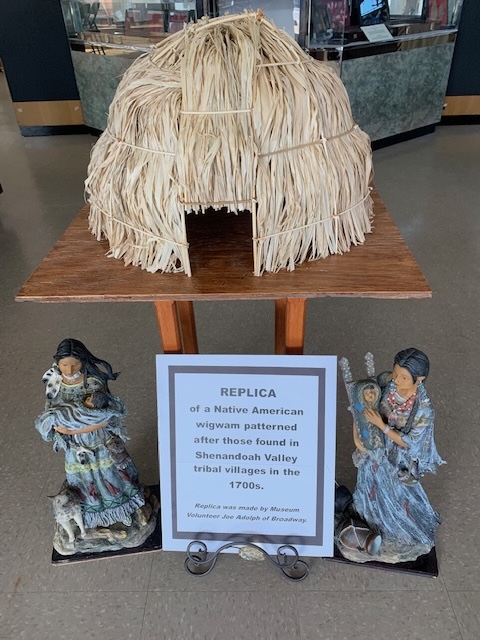
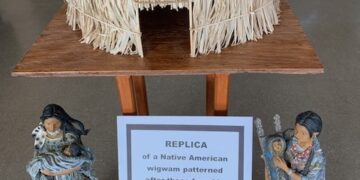
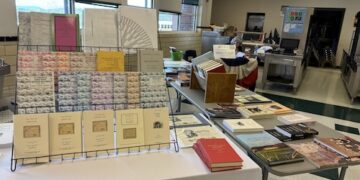
On Sunday, April 12, the museum will host a roundtable on The Indigenous People in Plains District, a look at our community 250 years ago based on the current exhibit at the Museum which runs through July.
Looking ahead:
Spring Programs in the Museum Community Room, Sundays at 2:00 pm
May (date TBD) – A Bluegrass Sunday afternoon
June 7 — Arlene Reid of Glenhaven Greenhouses will speak on summer gardening