











Behind the Scenes at the Bergton Community Fair The Biggest Little Fair Anywhere
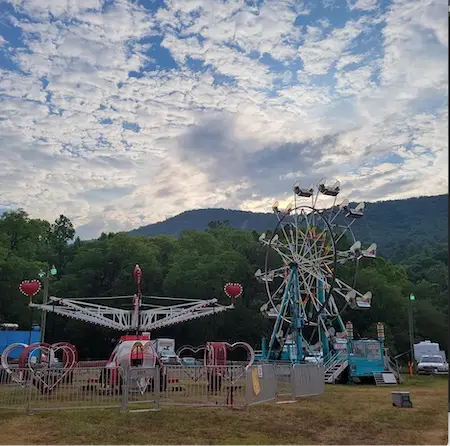
The Bergton Community Fair started as a one-night event on September 15, 1951. (My late husband Jon Whetzel who grew up across the river from the Bergton Fair and went to the Bergton School where the fair is held, was born on September 19, 1951, so he missed the first fair!) Everyone reading this article probably remembers going to the Bergton Fair at some point, and if not, this year’s dates are August 5 to 9, 2025, so check it out! When I was young, the fair was the highlight of the summer, and we saved what little money we could to go to the fair, ride the rides, and see our friends. Most folks who attend go for the exhibits, the food, the music, the rides, the social aspects of seeing friends and family each year and may not think of all of the behind the scenes work that goes into making the fair a success.
What goes into the exhibits at the Bergton Community Fair? There are now nine departments which take in exhibits from residents of Bergton, Criders, Fulks Run, and Mathias WV. The departments have changed over the years; my brother Robert Stultz remembers farm animals and says he exhibited the first pigeons. The current departments are Farm Crops, Horticulture, Canning, Sportsman Trophy, Baked Goods, Fancywork and Clothing, Junior Homemaking, Arts and Crafts, and Flower, as listed in the 2022 revised Bergton Community Fair Exhibitor Handbook.
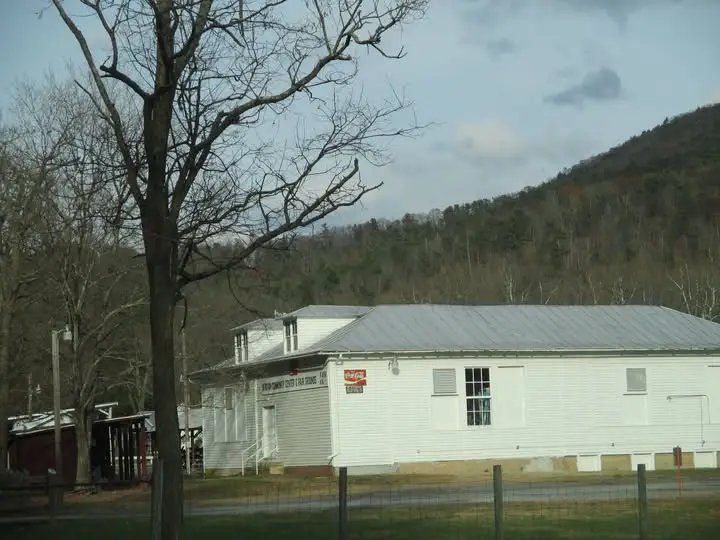
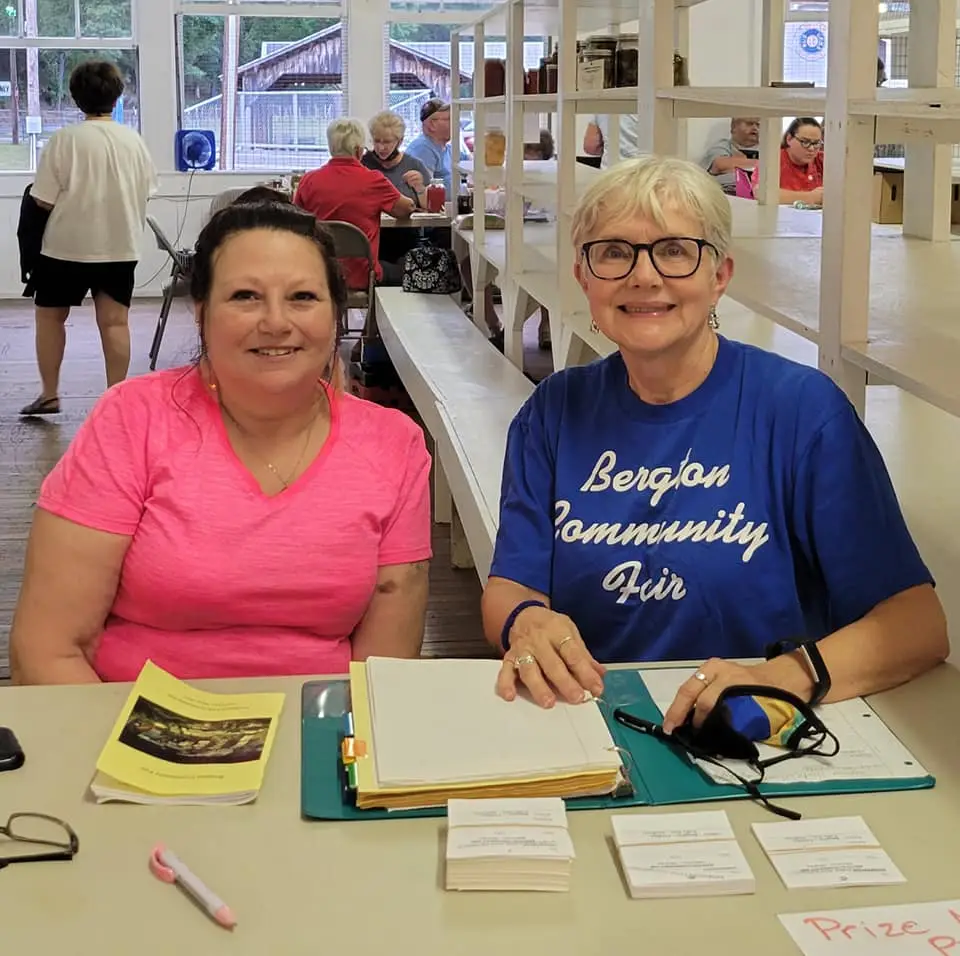
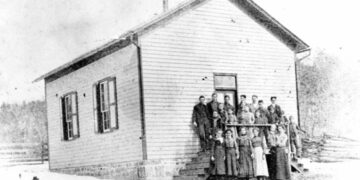
Each department has a chairman who is in charge of the exhibit process and recruit others to help. Ex Exhibits are accepted on Monday from 7 to 9 pm, and on Tuesday from 8 am to 12 noon. An exhibit card must be filled out for each item. The exhibit process is old school: paper and pencil! Exhibit cards are folded so that the exhibitor’s name doesn’t show when the judges arrive. Exhibitors may contact the department head in advance to get blank cards and complete them, which helps those taking in exhibits. Lines may get long depending on how many exhibitors and exhibits there are in a given year. The three room exhibit hall is inside the former Bergton school building. The building is not air conditioned, so fair volunteers and exhibitors can get hot!
After exhibits are taken in, judging starts. The committee chairman and volunteers accompany the judges as they look at each exhibit. Exhibits may be given a blue, red, or white ribbon. Once the exhibits are judged, the cards are opened so the exhibitor’s name shows, and the appropriate ribbon is placed on the exhibit. However, that is not the end of the process! Since the fair awards prize money, the amount for each exhibitor is calculated and turned into the fair office. In addition, the fair awards a sweepstakes ribbon for each department for the winner of the most ribbons using a point system, so that must be calculated!
As I reflect back on exhibits at the Bergton Fair, I remember exhibiting things as a child. We would get our prize money at the end of the week and spend it all on rides and
food! As a volunteer, I work with the Horticulture Department. My late mother, Eileen Dove Stultz, was the chairman of the Horticulture Department for some years. My niece Jennifer Heishman Haviland (whose husband Jeremy Haviland is now the Farm Crops Chair, replacing the late Bobby) took over from my mom when she was a teenager, and is still co-chairing the Horticulture Department with Amy Coverstone and my great niece Julia Haviland. I have volunteered with the Horticulture Department for
many years now; it’s a family tradition!
Why have I volunteered for the Bergton Community Fair for many years now? I like to give back to an organization that has meant a lot to me. I love seeing friends and family members
whom I only see once a year. Getting to know various judges or seeing judges whom I know is fun! Many of the Horticulture Department judges are agriculture teachers whom I have helped recruit or have learned to know. The late Kenneth Shifflett, who died in May, was a judge whom I learned more about over the years. Ken and his wife Anne retired to West Virginia and purchased and restored the old Cullers Run School (about which I have written an article.) He spoke at the New Market Area Library about his family being displaced from their home when Shenandoah National Park was built. I learned Ken had been an ag teacher, an extension agent, and a researcher at the University of Maryland. Farmers and longtime growers and producers Jim and Kathy Hepner from Shenandoah County, whom I knew from being their sons’ librarian and from the Farmer’s Market, are current judges. And what a pleasure to learn that another volunteer was my student in the library at the old New Market School! Neither Kim Brown nor I recognized one another at first, but now we have fun reminiscing while working!