







The Old Economy Is Still Breathing
What Happens When Trust Becomes Currency
In an age of apps and instant payments, quiet acts of bartering are still stitching neighbors together in ways money alone cannot.
CRACK.
The sound of my rifle rang in my ears as I watched her stumble and fall onto the leaf-covered ground. With that shot, I filled my third doe tag for the 2025 season and put healthy local venison in the freezer for my family. This rifle means a lot to me — not only because it puts food on the family table, but because of what it represents.
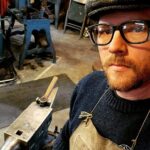
As a teenager, I did every odd job and saved every bit of change I could to pay for my education and tools that would later evolve into my blacksmithing career. For a couple of years, cutting and splitting firewood to sell was one of those jobs. That’s how I met Bill.
Bill started as a firewood customer. Later, my brother and I helped him clean out his barn. Then we helped him around the farm. He gave me one of my first ironwork commission jobs. We became friends, and I accompanied him on many hunting trips. Through that relationship of service, trust, and friendship, he gifted me my first real deer rifle — a tool that, to this day, symbolizes years of relationship-building and quiet acts of kindness exchanged between us.
It has always struck me as peculiar that nearly every small farm and homestead along my road owns a tractor and implements — skid loaders, dump trucks, and other equipment costing thousands not only to purchase but to maintain. From the brief historical digging I’ve done into early Valley life, this level of individual ownership is unique to our modern times.
Of course, for full-time farmers this equipment is often necessary. But for small homesteaders like myself, it was not always this way. There used to be hay-making days when entire communities rallied around a long weekend, sharing wagons and equipment to put back hay for the winter. Not every homestead owned every tool. Not everyone had a large barn.
Depending on your neighbors wasn’t optional — it was essential for survival. Through that dependence, generational friendships and alliances were forged, some of which may still be observed today.
About ten years ago, I had a conversation with two friends about equipment we all needed: a dump trailer, a wood splitter, and a compact tractor. Rather than each of us buying all three, we each bought one. Whenever one of us needed something, all we had to do was ask. If someone damaged a tire or broke something, they helped pay for it. We were all the better for it.
Relying on your neighbors when you need help is one of the clearest measures of a healthy community. It is the social glue working quietly behind the scenes. It builds interdependence and empathy for the needs of those who share our little piece of the world — the Valley we all call home.
It is hard to ignore that we live in uncertain times. The price of everyday goods and services continues to climb. The money that once filled a shopping cart now fills two grocery bags. Supply chains feel fragile. Many people are uneasy about the future.
Now more than ever, communities like ours need to support each other and keep local value close to home.
Unlike a cash economy, in a barter economy our trust is placed in our neighbors. Barter is the original currency.
Trust in the goodness and honor of our neighbors and small local businesses is part of what built this country — and it may well be part of what carries communities through uncertain seasons ahead.
With bartering, you can sometimes live a little above your means. You might not own a snowplow, but you might feed your neighbor’s animals while they’re on vacation. Suddenly, you have access to snow removal when you need it.
There’s no way around it — we need cash for gasoline, propane, and diesel. The folks at 7-11 aren’t taking homemade bread for fuel. But the more we conserve our cash for purchases outside the community, the more durable we become within it.
Bartering builds relationships before transactions. It rewards usefulness and skill, and it creates resilience and mutual dependence.
With each handshake honored, a community grows stronger — and less dependent on distant systems we cannot see.
A few years ago, a local farmer friend sold me her cattle trailer for an unbelievable deal. She trusted it would be put to good use. My brother and I split the cost and the repairs. Today, that trailer migrates from homestead to homestead, moving animals for at least half a dozen families. Each time someone uses it, they either add money to the repair jar or fix something that needs attention.
Since then, it has received new wiring and lights, newer tires, regular washing, and steady maintenance — all through a small network of families who understand the value of shared assets.
I don’t own a tractor, and yet there are many things for which I depend on one. During the last big winter storm, I knew our driveway would need to be opened. I wasn’t worried. I knew I could trust my neighbors. Within one phone call, both my driveway and my next-door neighbors were cleared.
This isn’t idealism. This is how it should work.
What is unrealistic is believing we can live isolated lives, never speak to our neighbors, and then expect help to appear when we need it most. Relationships must be woven deliberately. Trust must be forged over time.
Last year I got myself into a bit of a pickle.
In my overzealousness, I overcommitted and promised too many people too many things — and failed to write some of them down. It took months to make it right, but I showed up and kept my word.
Small towns have long memories.
Now I am much more careful not to overcommit. Crafting one’s character and dependability is essential in any functioning barter community.
There are countless real-life ways our family has conserved working capital through bartering:
• Mowing grass for new tires
• Sharing homeschool curriculum
• Trading butchered beef for butchered pork
• Trading pasture for fence upkeep
• Babysitting swaps for date nights
• Animal sitting for house sitting
• Welding work for taxidermy
• Scrap metal in exchange for help moving heavy furniture
These are not theories. These are recent, real examples of how communities grow stronger when we pull together.
Of course, barter is not for every situation.
Some people prefer cash only, and that is perfectly fine. It is wise to recognize that early and respect it. Personality differences can also make trust more complicated, and in those cases it may be better to keep things simple. Timing can create friction as well. Bartering across long time horizons requires deep, established relationships. Proceed carefully.
It is also worth noting that some forms of bartering may be considered taxable income. This is often viewed as a gray area, but it deserves thoughtful consideration. Don’t do anything that compromises your conscience or your integrity.
As we wade deeper into uncertain waters, I invite you to look for small ways to strengthen the ties that bind families and neighbors together here in the Shenandoah Valley. Pay attention to the needs around you. Notice the people you live beside. Remember the water we share and the air we all breathe.
Tonight, as I sit down to a meal of venison, I think about Bill and the rifle he gave me all those years ago.
And every time I carry it into the woods, I am reminded of something easy to miss in a world of tap-to-pay convenience:
The quiet strength of our local communities is this —
the old economy is still breathing.