












by Pat Turner Ritchie
Some family history books are as dry as dirt, with just names and dates. Some make all their relatives sound like saints.
And then there are family history books that give the unvarnished truth about relatives. Warren Souder’s books were the unvarnished-truth kind. His book on the Souder family didn’t hold back on uncomplimentary details about his Souder relatives. [Full disclosure—I am also a Souder relative]. In fact, as I was typing his book, I thought to myself that maybe he had included too many details about some folks and would upset their present-day relatives.
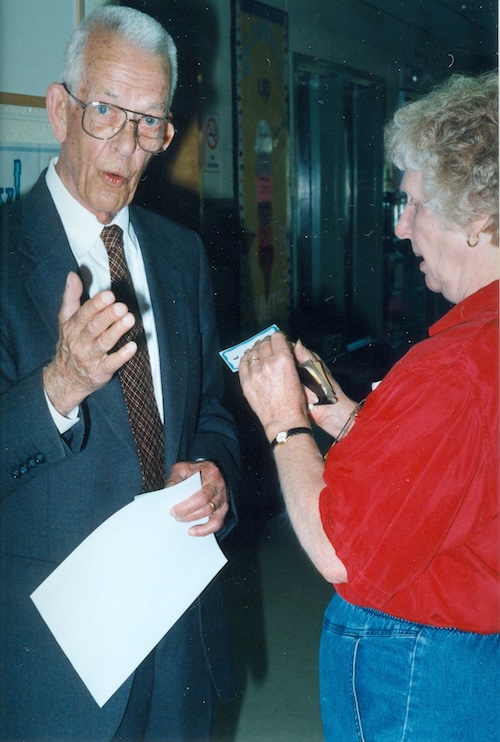
Warren’s unique sense of humor also showed through his story-telling. I’ll share some of the stories, using —- instead of full names. One of my favorites is about a man who died in 1933: “Levi — was old and stricken in years and was sick. He was expected to die very soon, but he had not been baptized. The Reverend Bishop Terry Shank, Mennonite, came to baptize Levi. The problem was that Mennonites were clean shaven, but Levi was not because he had a moustache. Could he be baptized by a Mennonite? Levi promised to shave off the moustache. He was baptized. Levi did not rid himself of the moustache because he died a few hours after the baptismal ceremony.”
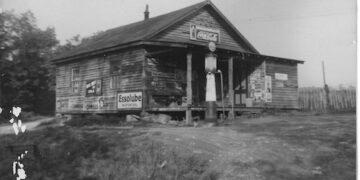
Warren grew up at Bergton where his family had lived for five generations. He absorbed many stories that were told again and again around the country store pot-bellied stove, like this one: “Bishop Shank had an automobile which he drove in second gear most of the time. Mennonites had been forbidden to own automobiles. Bishop Shank said that if you went to Hell by having an automobile he would be one of the first to get there. A ruling came in effect that a Mennonite could own an automobile if it were black, but no other colors.”
Warren had stories about other ministers. “The Reverend William Seybert, Lutheran…chewed tobacco while he preached his sermons. He spewed tobacco juice over the pulpit Bible as well as with the religious messages. The pulpit Bible gave mute testimony by stains of “juice” on many of its leaves.”
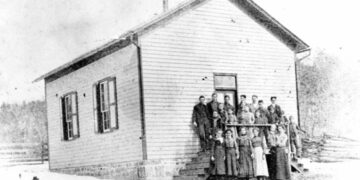
You may remember the story of school teacher Rufus — (1881-1963) whose students burned down the schoolhouse to get rid of him. In another story, “Although Rufus did not marry he did court the widow Margaret Smith. Upon arriving at Margaret’s house, Rufus would tie his horse to a tree and then get on with the courting. Many times, the horse left before Rufus who then had to walk to his home. To prevent the horse from leaving, Rufus led the horse to a window, passed the reins through and passed his arms through the bridle reins. Boys removed the bridle from the horse’s head and the horse went home leaving Rufus to carry the bridle home.”
One of Warren’s great-uncles was mischievous as a child. “When George Souder with his brother John, tied a basket to a calf’s tail they got into trouble because the calf ran, caught the basket fast into the fence and a post causing the calf’s tail to remain with the basket when the calf ran away.”
Another Souder relative figured a way to keep his children home working on the farm instead of going to school. “— Souder was a farmer. To escape the compulsory school attendance law, he, aided by a rope, measured the distance from his house to the school and found that it was greater than two and one half miles. So, his children were not compelled to attend school.”
Not all of our relatives were kind; some were downright mean and abusive. In a couple examples, Warren described some serious abuse situations. Stories like those have made me realize that the “good old days” were not so different from our current days, and our ancestors faced many of the same problems that we do.
There were poor families in the community, too. Warren’s father Charles was active in community affairs and also “helped the unfortunate to find food and care. Once he was rewarded by one neighbor who stated, ‘Charlie, I’ve got good news for you. They come and took eleven of my little fellers to the poor house.’”
We’ll close with a brain teaser from Warren. “J. Frank and Sarah Souder had a surrey. The surrey had a top, curtains and everything. On important occasions four horses pulled the surrey, sometimes three horses but usually there were only two. I am still confused about how Sarah, pronounced Sarry, could ride in a surrey, pronounced sarry. Perhaps you can understand?
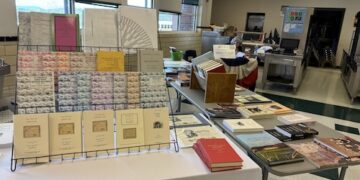
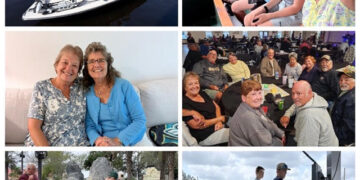
Final note: At Brocks Gap Heritage Day, 350 visitors came from 10 different states. A special thanks to family and friends who helped!