






















Ben Markovits and The Rest of Our Lives
The Rest of Our Lives is the latest novel by Markovits, a Texas native who now lives in the UK and teaches at Royal Holloway University of London. Born in California in 1973, he grew up in Texas, London, and Berlin. He earned a BA from Yale and a MPhil from Oxford University. A basketball enthusiast, he played for a professional team in Landshut, Germany before beginning his career as a writer.
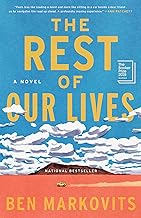
Since 2004, he has published 13 novels including a trilogy of novels about Lord Byron. He has also published essays, stories, poetry, and reviews on subjects ranging from the Romantic poets to American sports. His work has appeared in periodicals like The Guardian, Grantas, The Paris Review, and The New York Times. Markovits has won numerous awards including a fellowship from the Radcliffe Institute of Advanced Studies at Harvard in 2009 and an Eccles Centre Fellowship from the British Library in 2015. The Rest of Our Lives, short-listed for the Booker Prize last year, received positive reviews from The Washington Post, The New York Times, and The Guardian.
Before The Rest of Our Lives, Markovits’s most recent novel was You Don’t Have to Live Like This (2015), which won the James Tait Black Prize for Fiction in 2016. Though living in the UK, Markovits has set his most recent novels in the United States; both are strongly autographical.
During the past fifty years, beginning particularly with the novels of Philip Roth and Joan Didion, authors have begun to literally write themselves into their novels as did Jonas Hassen Khemiri in The Sisters. Ben Markovits has become part of that trend. In his 2015 novel, You Don’t Have to Live Like This, the central character is a British-American, who, disgruntled with teaching in a London University; comes home to visit his brother in the US and stays In The Rest of Our Lives, Tom Layward, the central character, is a middle-aged law professor, living in Westchester, NY. Uncertain about his future, he, at 55, is suffering from the stereotypical mid-life crisis.
The Rest of Our Lives also includes to two other motifs of US novels. One is the “road trip” format that began in the 19 century with James Fennimore Cooper in the Leather Stocking tales. The trend continued with Huck and Jim, who first travel down the Mississippi; the novel and ends with Huck heading West. Jack Kerouac’s, On the Road, one of the most famous novels of the 1950s is another road novel.
A second trend involves novels about middle-aged men, uncertain about” the rest of their lives.” Notable books by John Cheever, John Updike, Raymond Carver, Andre Dubus III, and others feature these troubled men. Markovits’s Tom Layward joins that group as he narrates the story of his uncertain life, but; unlike some of the men in earlier “whiney men” novels, he is less self-pitying, often humorous and self-deprecating.
During the first third of the novel, Layward tells much about his past life: his college dreams of becoming a basketball player, his love of literature—he first planned to be a professor of English and even began a dissertation on the fiction of John Updike. He describes his courtship and marriage to Amy, his beautiful Jewish wife, asserting that he gave up literature to become a lawyer/professor in order to insure her the kind of upper middle-class life she came from. His two children, a son and daughter, have had the benefits of this life, including private schools. In the immediate present, Michael, the son, at 24, has already left home and his 18-year-old daughter, Miriam, is about to head off to Carnegie-Mellon for college.
Tom’s marriage turned sour about six years earlier when his wife had an affair with a mutual friend. Though they remain together, their marriage has faltered and Tom has secretly planned to leave Amy when their daughter goes off to college. At this point, Tom is also having both undiagnosed health issues and troubles at the University where he teaches law. His road trip begins when he and his wife quarrel the day before they plan to take Amy to college; he ends up taking her alone, and, after dropping her off, he leaves Pittsburg, heading West.
Trying to get a grip on his present life, he visits several people from his past.
As a boy, he experienced trauma when his father abandoned his wife and sons to begin a new family with his mistress. Tom has never been close to his younger brother; the first stop on his trip is Indiana where his brother lives; he finds him separated from his family and not much concerned with a renewal of their relationship.
His next stop is Arizona where he visits his closed friend from college; this guy is comfortably settled into married life and again the visit has little to offer. His third visit is to the college girlfriend: Tom seems to hold lifelong regret for losing that connection. A single mother, apparently content with the direction her life has taken, she seems annoyed by his unannounced visit. On the road his greatest pleasure seems to come with pickup games of basketball with strangers. Finally, he visits his son, who is in graduate school at Berkeley—they are tentative with each other until Tom falls seriously ill. Markovits admits that the exact illness that he describes in the novel was his own. He has said that his own illness made him decide he to have his character’s search for more meaning in his life culminate with a serious illness, one that jolts him out of his discontent.