















Thursday, November 13, 2025
No Result
View All Result
The Chimney Rock Chronicle
FREE SUBSCRIPTIONS
  • Home
    • About Us
    • Pickup Locations
  • Columns
    • All
    • Book Notes
    • Faith
    • From the Potting Shed
    • Fulks Run Follies
    • Local Legends
    • Personal Development
    • Reflections from the Past and Present
    • The Wandering Wilkins

    Sarah’s Recipes

    Ken West.

    Examining the Lord’s Prayer- Part 1

    George Bowers.

    Apprenticeships And Trade Secrets

    Ken West.

    The Empowered Word – Pt 2

    George Bowers.

    The Seminary of Jimmy and Violet 

    Sarah’s Recipes

    Ken West.

    A Letter to the Broadway Community

    George Bowers.

    Work, Rest, and Labor Day

    Leading with a Clear Purpose: Nurturing Relationships with Family and Friends

    Leading with a Clear Purpose: Nurturing Relationships with Family and Friends

    Ken West.

    The Empowered Word – Pt 1

    George Bowers.

    Crowing For God’s Glory 

    The Wandering Wilkins

    The Wandering Wilkins

    Sarah’s Recipes

    The Chimney Rock Chronicle.

    Crashing the 1776 Rehearsals 

    Reflections from the Past and Present

    • Entertainment
      Gospel Vault

      Gospel Vault

      Off Broadway Players Announce 2025 Season

      Spotlight on the Off Broadway Players

      Band Notes

      The Lady in Black

    • History

      Headlines From the Plains District Memorial Museum

      ’85 Flood

      ’85 Flood

      Bev's Historic Notes.

      Bev’s Historic Notes

      Highlights from the Plains District Memorial Museum

      Turn on the Lights

      Timberville Historic Notes

      Timberville Historic Notes

      Highlights from the PLAINS DISTRICT MEMORIAL MUSEUM

      Highlights from the PLAINS DISTRICT MEMORIAL MUSEUM

      More to the Crider Story…

      More to the Crider Story…

      The Chimney Rock Chronicle.

      Timberville Historic Notes

    • Lifestyle
      • All
      • Health
      • Inspirational
      • Travel
      The Wandering Wilkins

      The Wandering Wilkins

      The Power of Perspective

      The Power of Perspective

      Sarah’s Recipes

      Retta’s Column

      Retta’s Column

  • Events
  • Our Sponsors
  • Advertising
  • Home
    • About Us
    • Pickup Locations
  • Columns
    • All
    • Book Notes
    • Faith
    • From the Potting Shed
    • Fulks Run Follies
    • Local Legends
    • Personal Development
    • Reflections from the Past and Present
    • The Wandering Wilkins

    Sarah’s Recipes

    Ken West.

    Examining the Lord’s Prayer- Part 1

    George Bowers.

    Apprenticeships And Trade Secrets

    Ken West.

    The Empowered Word – Pt 2

    George Bowers.

    The Seminary of Jimmy and Violet 

    Sarah’s Recipes

    Ken West.

    A Letter to the Broadway Community

    George Bowers.

    Work, Rest, and Labor Day

    Leading with a Clear Purpose: Nurturing Relationships with Family and Friends

    Leading with a Clear Purpose: Nurturing Relationships with Family and Friends

    Ken West.

    The Empowered Word – Pt 1

    George Bowers.

    Crowing For God’s Glory 

    The Wandering Wilkins

    The Wandering Wilkins

    Sarah’s Recipes

    The Chimney Rock Chronicle.

    Crashing the 1776 Rehearsals 

    Reflections from the Past and Present

    • Entertainment
      Gospel Vault

      Gospel Vault

      Off Broadway Players Announce 2025 Season

      Spotlight on the Off Broadway Players

      Band Notes

      The Lady in Black

    • History

      Headlines From the Plains District Memorial Museum

      ’85 Flood

      ’85 Flood

      Bev's Historic Notes.

      Bev’s Historic Notes

      Highlights from the Plains District Memorial Museum

      Turn on the Lights

      Timberville Historic Notes

      Timberville Historic Notes

      Highlights from the PLAINS DISTRICT MEMORIAL MUSEUM

      Highlights from the PLAINS DISTRICT MEMORIAL MUSEUM

      More to the Crider Story…

      More to the Crider Story…

      The Chimney Rock Chronicle.

      Timberville Historic Notes

    • Lifestyle
      • All
      • Health
      • Inspirational
      • Travel
      The Wandering Wilkins

      The Wandering Wilkins

      The Power of Perspective

      The Power of Perspective

      Sarah’s Recipes

      Retta’s Column

      Retta’s Column

  • Events
  • Our Sponsors
  • Advertising
No Result
View All Result
The Chimney Rock Chronicle
Subscribe
Thank you to our Sponsors! Thank you to our Sponsors! Thank you to our Sponsors!
Home Columns

Book Notes: Classic Southern Novels

Eudora Welty and The Optimist's Daughter

Jean Cash by Jean Cash
November 4, 2022
in Book Notes, Columns
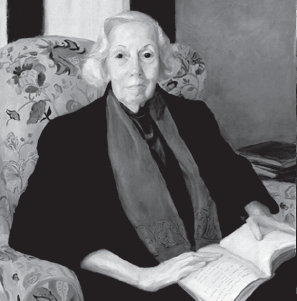
Credit: Eudora Alice Welty (1988) by Mildred Nungester Wolfe; oil on canvas. National Portrait Gallery, Smithsonian Institution

Like William Faulkner, Eudora Welty (1909-2001), another Mississippi author, produced work of enduring importance. A photographer, short story writer, novelist and nonfiction writer, she wrote her last (and arguably best) novel, The Optimist’s Daughter in 1972. It won the Pulitzer Prize the next year; Welty won numerous other awards during her lifetime including the Presidential Medal of Freedom, awarded to her by Jimmy Carter, in 1980. She was also the first living author to have her work published in the Library of America series. After she died, her home in Jackson, Mississippi, opened in 2006, as the Eudora Welty House and Garden. Restored by the state of Mississippi, the house remains much as it was when Welty lived there.

During her first twenty years as a writer, Welty lived under Faulkner’s shadow, as she admitted in a public lecture in Mississippi in the late 1970s. Welty’s outlook on the South, however, was considerably different from Faulkner’s. Though she was born in Jackson, Mississippi, her parents had emigrated there: her mother was from West Virginia and her father from Ohio. As a result, Welty’s view of the South seems, in some respects, more objective than Faulkner’s. She recognized both the strengths and weaknesses of her native state from a near-outsider’s perspective.

Growing up in a household of readers and listening to her parents read to each other, Welty became an early reader herself. She finished high school in Jackson and spent two years at the Mississippi College for Women before transferring to the University of Wisconsin where he majored in English. Graduating on the brink of the Depression, she continued her education in advertising at Columbia University in New York City. Shortly after she returned to Mississippi in 1931, her father died from leukemia.

After working at a radio station and as a society reporter for the Memphis Commercial Appeal, she became a publicity agent for the WPA in Mississippi, traveling all over the rural parts of the state, collecting stories, doing interviews, and photographing the daily lives of all classes of Mississippians.

Though she had already begun to write short stories, her first fame came when she exhibited a collection of her photographs in New York City in 1936,. She published her first short story (It’s one of her best), “Death of a Traveling Salesman” that same year and soon published other stories in The Sewanee Review and The New Yorker. She also became a regular reviewer for The New York Times Book Review.

She published her first collection of stories, A Curtain of Green in 1941 and. almost immediately, established a solid reputation as a new Southern writer. She went on to publish seven collections of short stories, five novels, and three works of nonfiction, including One Writer’s Beginnings (1984), based on a series of lectures she gave at Harvard. She also published two collections of photographs. Of the connection between her photography and fiction, Welty said, “I’m interested in the revelation of the instant. Like the flash of a camera, the record of a movement or an emotion is what fiction is, really.”

Welty’s stories and novels are notable for her depiction of place, her sympathetic portrayal of Southerners from all classes and races, her lyrical language, her use of allusions, and her emphasis on the importance of love. Of place, Welty said, “One place understood helps us understand all places better.” Of her concern with humanity, she said, “My continuing passion is to part a curtain, that invisible veil of indifference that falls between us and that blinds us to each other’s presence, each other’s wonder, each other’s human plight.”

The Optimist’s Daughter is certainly her most autobiographical novel. In 1960, her mother’s illness forced her to return permanently to Jackson, and Welty uses details of her mother’s final illness in the situation of Laurel McKelva Hand, the main character of her novel. Welty also includes stories of her mother’s early years in West Virginia. Laurel Hand’s brief marriage–her husband died in WWII–may also reflect her ill-fated relationship with a fellow-Mississippian, John Robinson.

Overall, The Optimist’s Daughter is poetic novel of family love and loss. Set in Mt. Salus, a small Mississippi town, the novel vividly depicts life among its upper-middle-class residents. Laurel McKelva Hand, in her forties, a graphic artist in Chicago, returns to the South to be with her father, a local Judge who has recently married a selfish younger woman from the working class. Laurel is with them during his delicate eye surgery in New Orleans. Afterward, Judge McKelva decides to die. Fay, with utterly selfish narcissism, assists in his death.

Welty covers their return to Mt. Salus. Residents of the town serve as a chorus, providing insights into town dynamics during this time of community mourning. The main focus of the novel, however, rests on Laurel Hand as she deals with the loss of her parents and long-dead husband. In a pivotal scene, she recalls her wedding trip by train to the geographical point where the Mississippi and Ohio rivers converge. Re-experiencing this confluence (as Welty calls it) helps Laurel to accommodate to the sadness in her life: “For her, any life, she had to believe, was nothing but the continuity of its love.”

The Optimist’s Daughter is both sad and rewarding; for those of us who understand small town life, it substantiates personal knowledge while also offering advice on how to live. Kirkus Review aptly describes the novel as “perfectly poised between art and the experience that she [Welty] replicates.”
Photograph of Jean Cash
Jean W. Cash, Professor of English, Emerita
James Madison University


Jean Cash

Jean Cash

Jean W. Cash, Professor of English, Emerita James Madison University

Next Post
Ken West Jr.

Understanding the Holy Spirit – Part 4

Popular Articles

  • Sweet Plans and Big Flavor Coming to Broadway: Zach Roberts and Tim Lapp Build for the Future

    Sweet Plans and Big Flavor Coming to Broadway: Zach Roberts and Tim Lapp Build for the Future

    0 shares
    Share 0 Tweet 0
  • Sarah’s Recipes

    0 shares
    Share 0 Tweet 0
  • Meet The Four Broadway Town Council Candidates

    0 shares
    Share 0 Tweet 0
  • Town Council Candidate: Tristan Sinnett

    0 shares
    Share 0 Tweet 0
  • Town Council Candidate: Woody Brown 

    0 shares
    Share 0 Tweet 0
  •  Town Council Candidate: Liz Fawley

    0 shares
    Share 0 Tweet 0
  •  Town Council Candidate:  Joan Hoover-Shifflett

    0 shares
    Share 0 Tweet 0
  • Greater Hope Seeks New Director to Continue a Legacy of Healing

    0 shares
    Share 0 Tweet 0
  • Reflections of the Past and Present

    0 shares
    Share 0 Tweet 0
  • ’85 Flood

    0 shares
    Share 0 Tweet 0
  • About Us
  • Advertising
  • Contact
  • Pick Up Locations

© 2024 The Chimney Rock Chronicle - Website & E-Commerce by Bare Web Design, Broadway Va.

No Result
View All Result
  • Home
  • Columns
  • History
  • Sports
    • Thank you to our 2025 Sponsors!
    • Advertising

© 2024 The Chimney Rock Chronicle - Website & E-Commerce by Bare Web Design, Broadway Va.