











By Pat Turner Ritchie
Folks often learned music at churches and singing schools. Some community members were well-known as singing masters. The December 1913 obituary for George “Mountain George” Fulk (1820-1913) states that “Mr. Fulk was one of the oldest men in Rockingham at the time of his death. He had been a member of the United Brethren Church for seventy years and for half a century was widely known as a singing-school master.”
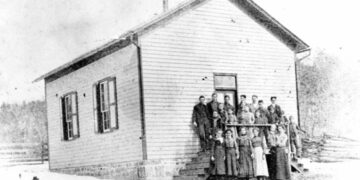
 George’s nephew John R. Fulk (1854-1948) conducted a singing school at Whitmer School in 1886 which “was largely attended,” and he gave one at Dry River School “to a large gathering.” In 1887, Miss Pamma Fulk, a cousin of John R. Fulk, was giving music lessons at Fulks Run to two young ladies from Dayton. More recently, Adam R. Shickle (1865-1956) was a piano and organ teacher in the Gap.
In November 1880, Rev. Professor Timothy Funk of Singers Glen conducted a serious musical convention at Caplinger Church (now United Methodist). The Old Commonwealth Dec. 2, 1880, gave a full description of the convention:
“The session opened on Monday evening, Nov. 15, with A. B. Whitmore, President; Wm. R. Crider, Secretary; A. B. Yankey, Assistant Secretary; Paul Smith, Treasurer. Day and night sessions were held continuously, commencing at 9 a.m., closing at 3 p.m., and at night, opening at 6 and closing at 9 p.m. The members of the convention and public generally may congratulate themselves upon the success of this enterprise. The musical talent developed would have done credit to places of much greater pretentions, the attendance good, excellent order prevailed, and with the instructions of the able teacher, the music itself and lectures delivered by members of the convention, altogether formed an event long to be remembered by the good people of this vicinity.
On Tuesday evening, Prof. Funk lectured on the origin and offices of music, and Prof. Wm. Grim, on Energy and Progress. On Wednesday evening Prof. H. T. Wartmann, of Harrisonburg, led the convention in music and exercises.”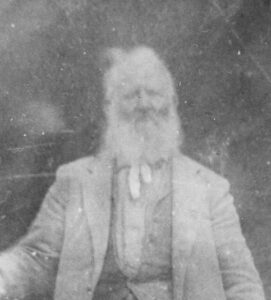
On Thursday evening Prof. Funk performed the wedding for Prof. Whitmore’s daughter Susannah and William R. May at the bride’s home. After the ceremony attended by a large group of friends, they moved to the chapel. The writer of the newspaper article wrote that “’hoodlums’ overflowing with the festivity of the occasion, musical enthusiasm, and hard cider, started out to give the new married couple an old-fashioned ‘callithumpian’ serenade,” but the convention president squelched their ruckus.
Going back to the article: “Friday evening, we had addresses by Paul Smith, Prof. D. M. Wittig, and Pres’t Whitmer. These addresses on the utility and importance of music were well rendered and showed that the authors of them had given the subject serious and useful thought.
The convention closed its session on Saturday night, Nov. 20. Prof. Grim lectured to a large and appreciative audience. By diagram on the black board, he showed the position of music in the field of human knowledge, and its relation to the other arts and sciences. He produced a diagrammatical outline of musical instruction. He then spoke of the philosophical principles involving the production of sound, the mechanism that conveys it to the seat of consciousness and thus evinced the goodness of God by constructing us mentally for musical enjoyment and then furnishing us with the means of producing that enjoyment. He spoke of the various uses and effects of music—how intimately music is woven into the woof of life, from the mother’s lullaby to the funeral dirge, on the battle-field, to the home circle, at the stake, on anniversaries, at public worship, and the close of life, and doubtless his closing remark found a responsive echo in in every heart—’Let music charm me last on earth, and greet me first in heaven.’
Prof. Funk followed in some eloquent and feeling remarks on the moral and spiritual effects of music. Painting, the twin sister art, impresses us by a masterly combination of materials external to us, but music stirs the soul from within—nay, music itself may be but the manifestations of some infinite soul, glimpses of which come over to as from the infinite beyond. On motion the convention adjourned with a vote of thanks to the people in the vicinity for their kind hospitality, interest manifested, and good order.”
We have to wonder how many attended this convention and where they stayed in Criders.Not all music was sacred. Will Steward, who may have been born a slave in the Gap, provided music for fun. “Wm. Steward still handles his musical instrument with great skill to the delight of the beaus and beaux,” said the Spirit of the Valley in 1886. “For music, delicious and sweet, just give Will Steward a call. He’s thar every time.”